The 10-Point Living Room Styling Checklist Before Guests Arrive
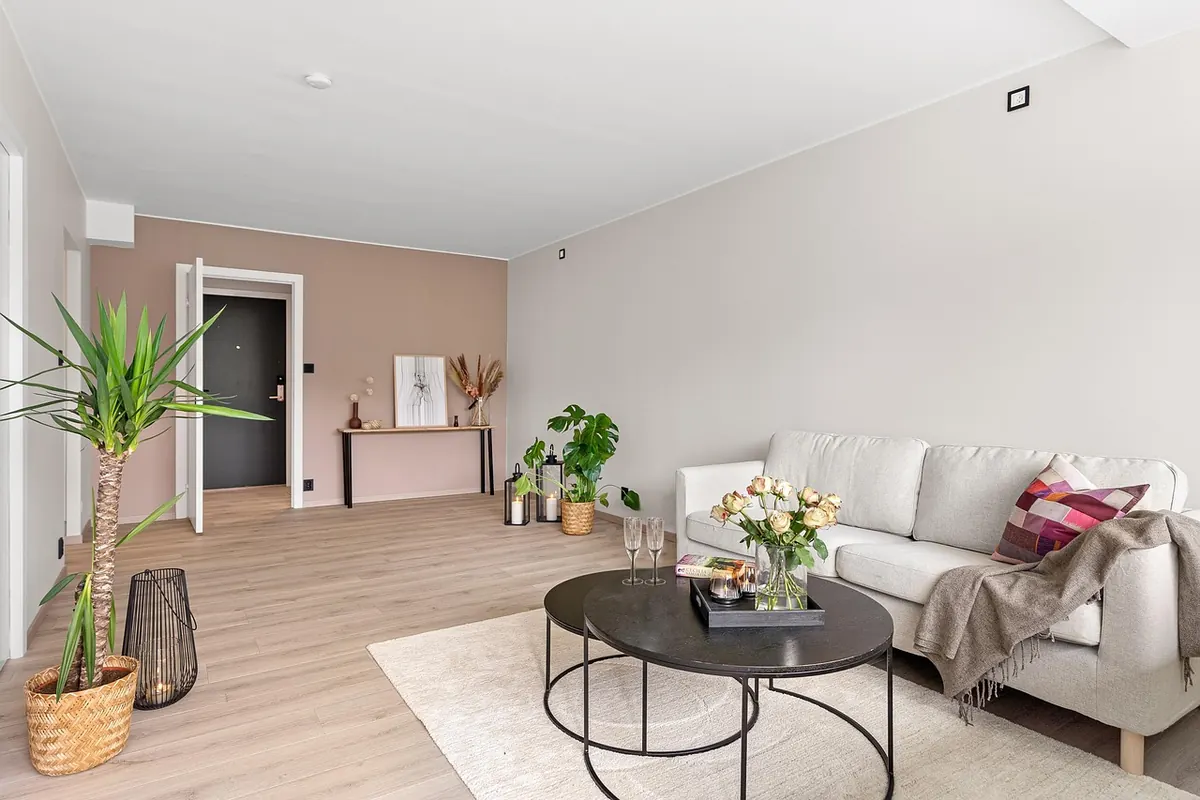
A living room can look perfectly fine all week and then, twenty minutes before guests arrive, reveal every stray cable, half-empty mug, and cushion that has lost its shape. The fix is rarely a full redesign. It is a sequence of small, deliberate moves: clear the view from the doorway, reset the seats, edit the surfaces, warm the light, and add a few finishing touches that make the room feel cared for rather than staged.
Work through this checklist in order. It takes about half an hour in a typical living room, and most of that time is spent putting things away rather than adding anything new.
Start at the Doorway
Stand where your guests will enter and look into the room. You are checking the first impression, not judging the whole space. What catches your eye first? A pile of shoes, a tangle of charging cables, a stack of post that never made it to the study? Move those things out of the sightline before you touch a single cushion.
Clear a obvious path from the door to the nearest seat. Guests should not have to step over a footstool, a bag, or a child’s toy to reach the sofa. A shallow basket near the doorway can hold everyday items that have no other home, but keep it tidy: a basket works only when it is not overflowing. If the room has a console table by the entrance, leave one useful thing on it, such as a small dish for keys or a low lamp, rather than a cluster of clutter.
This is also the moment to check the floor. Vacuum visible crumbs, shake out the doormat, and straighten the rug so it runs parallel to the sofa. A rug that is slightly askew makes the whole room feel unsettled, even when everything else is in place.
Reset the Seating
Guests notice whether a room looks welcoming to sit in. Pull chairs and poufs slightly away from the walls and angle them toward the sofa so the arrangement suggests conversation. If a chair has become a temporary wardrobe, clear it completely. A coat draped over the back of a dining chair is normal life; a coat draped over the only armchair reads as “we were not expecting you.”
Check that every seat has a place to put a drink. Side tables do not need to match, but they do need to be within reach. If a guest would have to balance a glass on the arm of the sofa or on the floor, slide a small table or stool into position. Clear the seats themselves: no laptops, no unfolded laundry, no paperwork. Then fluff the cushions and give the sofa a quick brush with your hand or a lint roller.
Edit the Surfaces
Coffee tables and side tables collect objects the way a kitchen counter collects mail. For hosting, the goal is not emptiness; it is a clear place to land a tray or a glass. Remove everything that does not belong, then put back only what earns its place: a stack of two or three books, a small dish, a candle, a single decorative object. A tray is a useful editor because it groups small items and makes them look intentional rather than scattered.
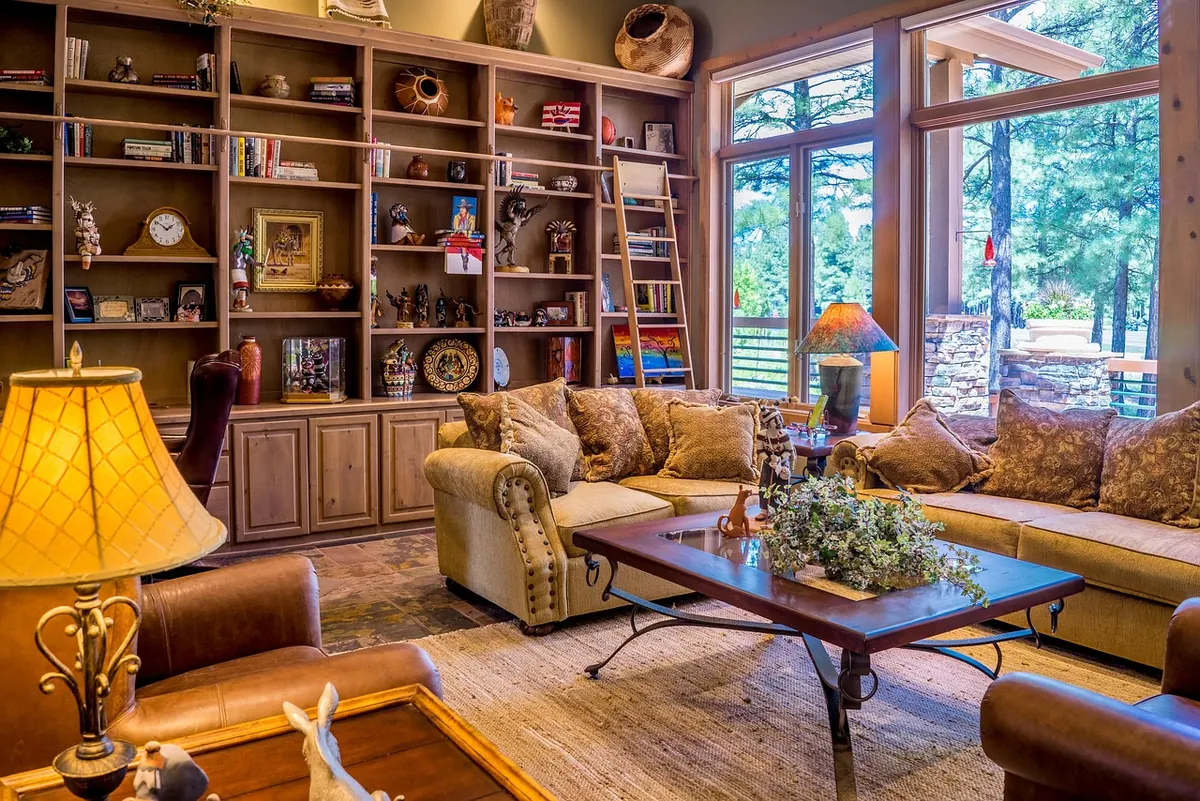
Wipe the surfaces properly. A visible ring on a coffee table undermines the effort of everything else. Move remotes into a drawer or a covered box, tuck charging cables behind furniture, and clear the mantelpiece of anything that is not part of the display. If you have a bookshelf, resist the urge to reorganise it from scratch. Just straighten the rows, pull a few books forward, and remove anything that does not belong there.
Layer the Light and Soften the Room
Lighting is the fastest way to change how a living room feels. Turn off the harsh overhead light and switch on two or three smaller sources instead: a floor lamp in a corner, a table lamp beside the sofa, a small lamp on a sideboard. Aim for warm-white bulbs and, if your lamps have dimmers, take them down a little. The room should feel bright enough to see each other comfortably, not bright enough to perform surgery.
Next, soften the hard edges. Fluff the throw pillows and give them a light chop in the middle so they hold their shape. Fold throws rather than draping them in a heap. Smooth the sofa cushions, plump the seat pads, and straighten the curtains so they hang evenly. If the room has a rug, give it a quick brush or vacuum, especially around the edges where dust gathers.
Quick textile check
- Fluff and rotate sofa cushions, then return them to their places.
- Fold throws into a neat rectangle and lay them over the arm of a chair or sofa.
- Check cushions for crumbs, pet hair, and loose threads; use a lint roller if needed.
- Straighten the rug and make sure it does not curl at the corners.
- Open or close curtains so the window looks intentional, not forgotten.
Add the Finishing Touches
Finishing touches should feel calm, not crowded. Add one living element: a small vase of flowers, a bowl of citrus, or a plant with clean leaves. Bring in a scent that is subtle—a candle that is already lit, or a diffuser placed where guests will pass rather than straight under their noses. Set out coasters within easy reach. If you are serving drinks, create a small host station on a sideboard or tray so you are not searching for a bottle opener when the doorbell rings.
Then do the ten-point sweep. This is the checklist to run in the final ten minutes, after the cooking and before the first guest arrives.
The 10-point living room checklist
- Clear the doorway sightline. Remove bags, shoes, post, and anything that blocks the view into the room.
- Open the walking path. Move footstools, toys, and trailing cables out of the route from door to seat.
- Reset every seat. Clear coats, laptops, and laundry; angle chairs toward the sofa.
- Check side tables. Make sure each seat has a safe place for a glass within reach.
- Edit the coffee table. Keep a tray, a book stack, or one object; remove the rest.
- Fluff and fold. Plump cushions, fold throws, and smooth the sofa seats.
- Layer the light. Switch off the overhead light and turn on two or three warm lamps.
- Refresh the textiles. Vacuum the rug, lint-roll the sofa, and straighten curtains.
- Add one living thing. Flowers, a plant, or a bowl of fruit—simple and fresh.
- Do a final doorway look. Stand at the entrance, scan left to right, and remove the one thing that still looks out of place.
A Calm Room, Ready for Company
The best hosting rooms are not the most decorated ones. They are the rooms where guests can find a seat, put down a glass, and feel that someone thought ahead. Once the checklist is done, stop adjusting. Light the candle, put on quiet music if that suits the occasion, and leave the room alone. A little imperfect is fine; a room that feels calm and ready is the point.
Photo: 23555986 / Pixabay