Coffee Table vs. Ottoman: Which Center Piece Fits Your Living Room?
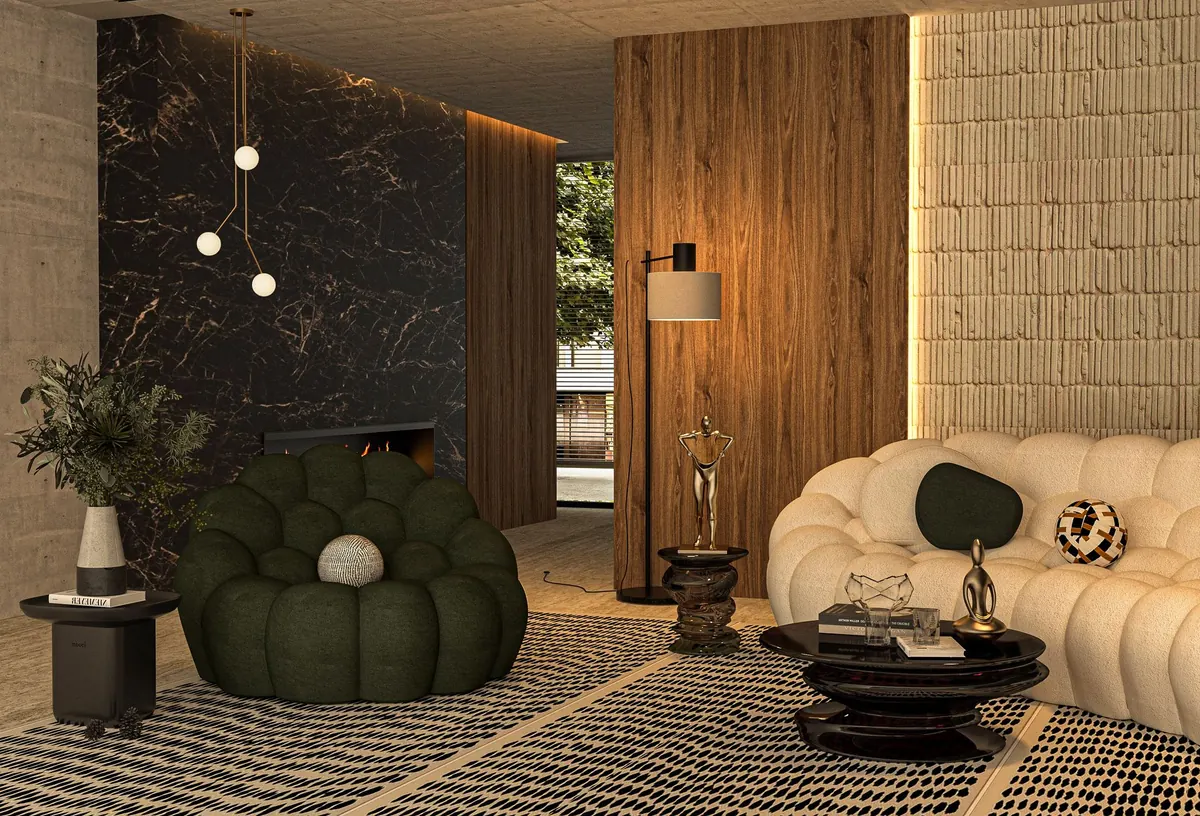
The center of a living room is a small patch of real estate with a big job. It holds the coffee cups, the books, the board game that stays out for a week, and the feet that finally come to rest after dinner. It also sets the tone for the whole room. Choose a coffee table and the space feels structured, display-ready, and easy to wipe clean. Choose an ottoman and it feels softer, more forgiving, and made for gathering. Neither is the default right answer. The better question is which one fits the way you actually live.
Start With How You Use the Room
Before you compare shapes and finishes, watch your living room for a few days. Where do people put down a glass? Is there a spot for the remote, or does it live on the sofa arm? Do children draw at the center of the room, or do adults mostly read with their feet on a stool? These small habits reveal more than a mood board ever will.
A coffee table earns its place when the center of the room needs a stable surface. It is the natural home for a lamp, a stack of magazines, a bowl of fruit, a puzzle, or a tray of drinks. If you host often, play cards, or like to keep a candle and a small vase in view, a table gives those objects a clear stage. It also makes the room feel more furnished and intentional, especially in open-plan spaces where the living area needs a visible boundary.
An ottoman makes more sense when the center of the room is primarily about people. It offers a place to sit during a crowded movie night, a soft edge for toddlers, and a footrest that does not require rearranging the furniture. With a sturdy tray on top, it can hold drinks and snacks for an evening. Without the tray, it becomes a landing pad for tired legs. That flexibility is its real advantage.
The Case for a Coffee Table
A coffee table is the more practical choice for anyone who likes a surface to stay a surface. Drinks sit flat. Laptops perch without wobbling. A board game can stay out between rounds. The hard top also makes cleaning simple: a quick wipe handles crumbs, condensation rings, and craft glue before it becomes a permanent feature.
What a table does best
- Anchors the seating group and gives the eye a clear center point.
- Displays books, bowls, flowers, and small objects without swallowing them.
- Provides a stable spot for drinks, snacks, games, and remote controls.
- Works well in formal or minimally styled rooms where crisp lines matter.
- Comes in nesting and lift-top versions for tighter spaces or dual use.
The trade-off is physical. A table has corners, and shins find them. In a room with toddlers, a glass top or a sharp-edged rectangle can feel like a liability. A round or oval table softens the risk and makes traffic flow easier. If your sofa is low and deep, a table that sits close to seat height feels more useful than a very low slab that forces you to lean forward for every sip.
The Case for an Ottoman
An ottoman is the friendlier center piece. It invites bare feet, cushions the edge of the seating group, and doubles as extra seating when friends squeeze in. In a small room, an upholstered ottoman can make the furniture arrangement feel less crowded because it does not add another hard visual line. In a family room, it can be the difference between a room that feels relaxed and one that feels like a showroom.
The catch is the surface. Fabric or leather is not a table. You need a tray with a flat, stable base if you want to balance a cup of coffee, and even then, a sudden sit-down can send a drink sideways. Spills on upholstery need faster attention than a spill on wood or stone. If you eat in the living room regularly, choose a tight weave, a wipeable performance fabric, or leather, and keep a tray that lives there permanently. A storage ottoman is a quiet win for blankets, remotes, and children’s toys, but check that the lid stays open safely and does not pinch fingers.
Scale, Proportion, and Walkways
Scale decides more than material. A coffee table that is too small makes the sofa look oversized and leaves drinks stranded on the floor. One that is too large turns the seating area into an obstacle course. As a working guide, aim for a table or ottoman that spans roughly two-thirds of the sofa’s length. Leave enough room between the edge and the sofa to reach a drink comfortably, but not so much that the piece floats away from the conversation.
Walkways matter just as much. You should be able to pass between the center piece and a side wall or console without turning sideways. In a narrow room, a long, slim table or a pair of small nesting tables may work better than one deep rectangle. A round ottoman can soften a square seating group and make circulation easier. In a large room, a generous square or a long rectangular piece gives the seating area weight; a small round stool can disappear.
Height is the quiet detail people notice later. A coffee table should sit close to the height of the sofa seat, perhaps a touch lower, so reaching for a glass feels natural. An ottoman usually sits lower, which is comfortable for feet but less useful for dining. If you plan to use a tray for meals, test the height with a cushion on your lap. If you want to prop up your feet, lower is better.
Comfort and the Feet-Up Factor
This is where ottomans win without much argument. A padded top lets you put your feet up without dragging over a separate stool. That small comfort changes how long people linger. It also makes the room feel less formal. If your living room is where you watch films, read on Sunday mornings, or take naps that start as “just five minutes,” an ottoman is doing real work.
A coffee table can still be comfortable if you pair it with a footstool or choose a table with a lower shelf for a basket of blankets. But it will never be as yielding as an upholstered top. Think about who uses the room most. Guests in hard dining chairs may appreciate the sofa, but they will not necessarily put their feet up. Teenagers, pets, and tired parents will.
Styling: Hard Surface vs. Soft Volume
A coffee table is a display tool. It lets you layer a tray, a stack of art books, a small bowl, and a candle without burying them in fabric. Wood brings warmth, stone brings a cool note, glass keeps a small room light, and metal adds a crisp edge. The risk is clutter: a flat surface collects mail, keys, and orphaned chargers unless you give those things another home.
An ottoman is a volume, not a shelf. It adds texture through bouclé, linen, leather, or velvet and can introduce color in a way a wooden table cannot. Keep the top simple: one tray, one book, maybe a small plant. Too many objects on a soft surface look unstable. If you want the look of a table without giving up the softness, choose a large ottoman with a rigid tray and treat the tray as the tabletop. That hybrid approach works especially well in rooms that need to shift from family lounge to guest seating.
A Quick Decision Guide
- Choose a coffee table if drinks, snacks, games, and display objects are part of daily life.
- Choose an ottoman if feet-up comfort, extra seating, and a softer look matter more than a permanent hard surface.
- Choose a tray-topped ottoman if you want both but can commit to keeping the tray stable and clear.
- Choose a round or oval shape in tight rooms or homes with young children.
- Choose nesting tables if you need flexibility and space to move.
Make It Work in Your Room
Measure the seating area before you shop, then tape the footprint on the floor. Sit on the sofa and pretend to reach for a drink. Walk around the taped shape. If the piece feels too far away or leaves no clear path, adjust the size or shape. For an ottoman, bring a tray to the store or test one at home with a full mug and a book; stability matters more than a pretty photo. For a table, check the edges and finish against your household’s habits. A rounded wood table may suit a busy family better than a glass rectangle, even if the glass looks lighter in the showroom.
Whichever you choose, give the center piece one clear job. A table can hold a tray, a lamp, and a small stack of books without becoming a dumping ground. An ottoman can be a footrest, a spare seat, and a tray table, but not all at once. The right choice is the one that makes the room easier to use on an ordinary Tuesday, not just the one that looks best in a photograph.
Photo: achraf borkadi / Pexels