Living Room Lighting Layers Explained: Ambient, Task, and Accent
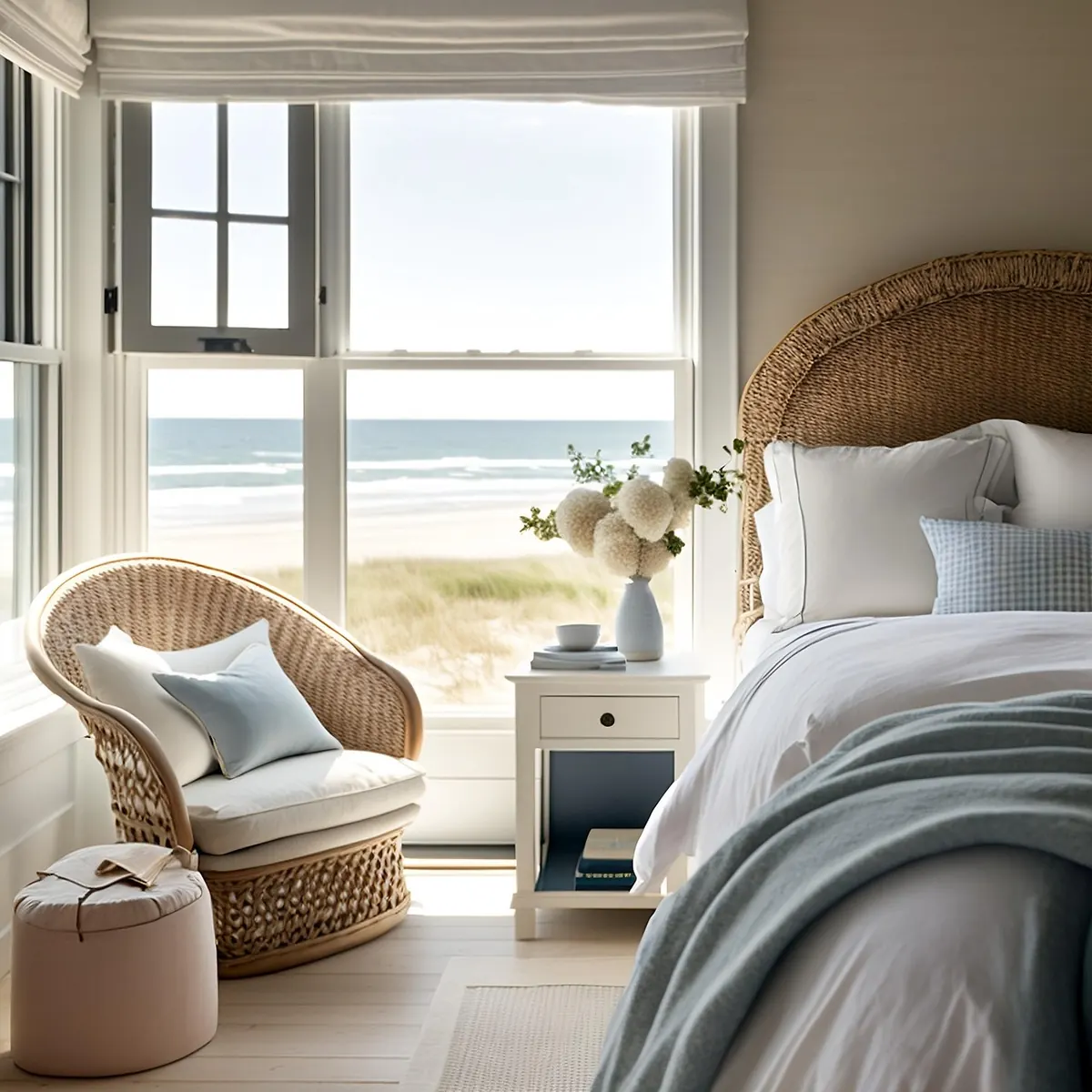
It happens at the same hour most evenings. Someone reaches for the switch by the door, the ceiling light comes on, and a room that felt warm at four in the afternoon suddenly looks like a waiting area. The sofa hasn’t moved. The shelves are the same. What changed is the light.
Good living room lighting isn’t a single fixture you buy and forget. It’s a set of layers you build, and decorators have long divided those layers into three: ambient, task, and accent. Understand what each one is for, and you can make a modest room feel generous, a dim corner feel usable, and an ordinary Tuesday evening feel like an evening.
The Three Layers, Briefly
Before placements and bulbs, it helps to be clear about the job each layer performs. The confusion usually comes from expecting one lamp to do all three at once, which is why rooms end up either glaring or gloomy.
- Ambient light is the base layer. It fills the room so you can move around safely and see the whole space without squinting. It should be soft and fairly even, not dramatic.
- Task light is directed light for a specific activity: reading, writing, sewing, chopping, homework, a puzzle on the coffee table. It’s bright where your hands and eyes are, and it stays out of your face.
- Accent light is decoration with a purpose. It picks out texture, artwork, or architecture, and it creates the pools of light and shadow that make a room feel layered rather than flat.
Most living rooms need all three. What changes from home to home is the balance between them.
Ambient Lighting: Build a Soft Base
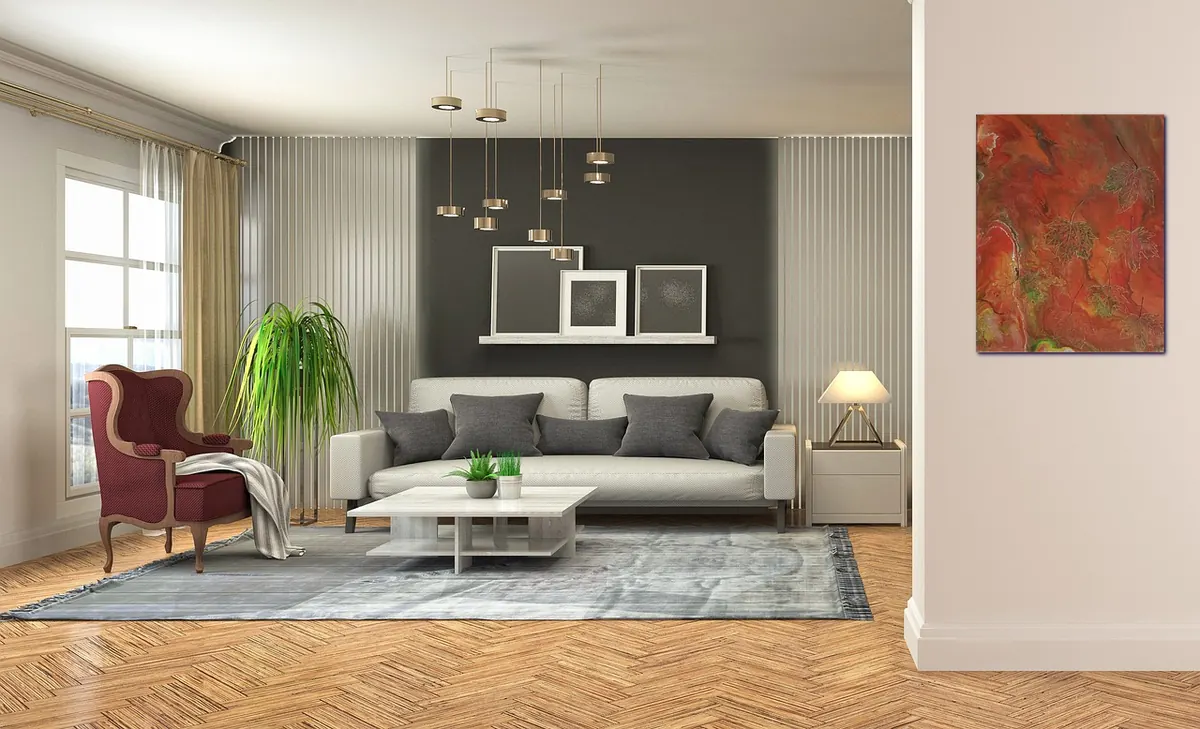
A single pendant in the middle of the ceiling is the most common lighting compromise in modern homes, and it’s an understandable one. It’s cheap, it’s already wired, and it lights the whole room. The trouble is that it lights everything equally, from directly above, so faces get shadowed and the room reads as flat.
Instead, think of ambient light as two or three gentle sources working together. A ceiling fixture on a dimmer can be one of them, especially if it’s fitted with a diffuser rather than a bare bulb. A floor lamp aimed at the ceiling bounces soft light back down and is one of the kindest tricks in a rental flat, where you can’t add wiring. Wall washers or a discreet cove along one wall will lift a dark ceiling and make the room feel taller.
The goal is even coverage at a level that feels calm rather than bright. In practice, that usually means turning the ambient layer down to roughly half of what you first assume. A room lit to a comfortable evening level hides dust, softens tired paint, and makes everything in it look more expensive.
A note on small rooms
Small living rooms often get one bright central light because the instinct is to compensate for the size. It rarely works. Two or three lower-output sources spread around the room will make a compact space feel larger, because your eye reads the overlapping pools of light as depth.
Task Lighting: Light Where Your Hands Are
Task lighting is where most living rooms fall short. Walk around yours and ask honestly: where do I actually sit and do something that needs to be seen? The answer is usually a reading chair, one end of the sofa, and a desk or table in the corner that’s currently lit by hope.
A reading lamp should throw light over your shoulder and onto the page, with the shade positioned so the bulb sits below eye level when you’re seated. If you can see the bulb from your chair, you’ll feel it as glare within minutes. An adjustable floor lamp with a swing arm gives you the most control; a table lamp on a side table works if the table is the right height. Test it by sitting down with a book before you commit.
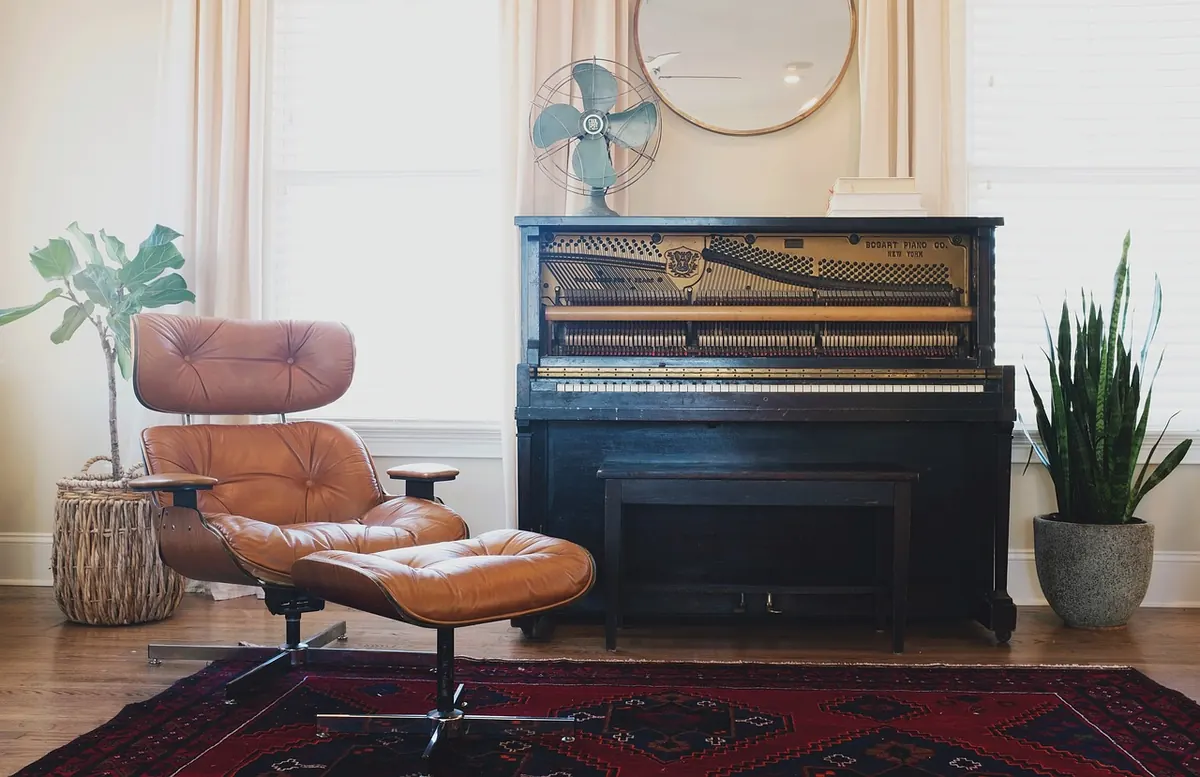
For a desk or hobby table, put the light on the opposite side from your writing hand so you aren’t casting your own shadow onto your work. A clamp lamp or a slim task lamp with a movable head is more useful here than anything decorative. And if the room has a dark corner where a piano, a bar cart, or a jigsaw lives, that corner needs its own small light. Chances are it will quickly become the most used spot in the room.
Accent Lighting: Depth, Texture, and a Little Drama
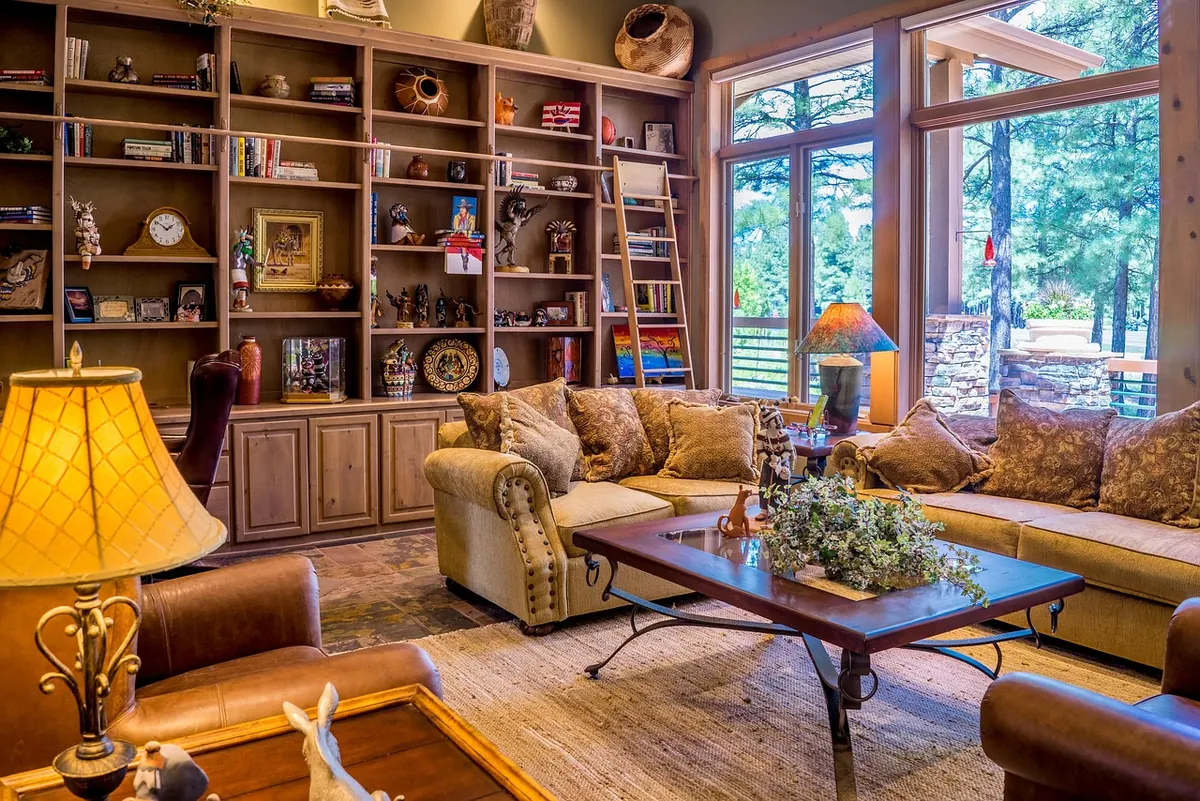
Accent light is the layer people notice without knowing they’ve noticed it. It’s the small lamp on the console that makes the hallway beyond look inviting. It’s the uplight behind the fiddle-leaf fig that turns a plant into a silhouette. It’s the picture light that makes a print look like it belongs in a gallery.
Two rules keep accent lighting from becoming clutter. First, aim it. Accent light works when it’s pointed at something specific — a textured wall, a stack of books, a wooden beam, a piece of art — and it’s pointed slightly off-axis, at about thirty degrees, so you light the surface without bouncing glare back at the viewer. Second, keep it sparse. Two or three accent points in a living room is usually plenty; more than that and the room starts to sparkle like a shop window.
Small lamps are the easiest accent tool because they need no installation. A slim lamp on a bookshelf, a rechargeable table lamp you can move to the dinner table, a low lamp on the floor beside a chair — each adds a pocket of warmth. Warm bulbs matter here; a cool white accent light looks clinical next to fabric and wood.
Combining the Layers: A Practical Plan
Layering is easier if you do it in a fixed order, ideally in the evening when you can see the effect of each change.
- List what the room does. Reading, television, conversation, homework, a glass of wine with a friend. Four or five honest answers are enough.
- Set the ambient base first. Get the room to a soft, even glow with the ceiling light low or off and the floor and table lamps doing the work.
- Add task light where the list says you need it — one lamp per activity, placed so the light falls on the page, screen, or table and not into your eyes.
- Add two or three accents to carve out depth: a plant, a picture, a dark corner, a texture you want to show off.
- Group the switches by layer. Put ambient lights on one dimmer or smart plug, task lights on another, accents on a third. Then set two or three favourite combinations and stop thinking about it.
One detail worth planning: television watching. A bright lamp facing the screen will wash it out, and a lamp behind your head will reflect in it. A soft glow behind or beside the television is the comfortable compromise, with the ambient layer dimmed low.
Bulbs, Colour, and Dimming
The layers only work if the bulbs cooperate. For a living room, look for warm white light in the region of 2700K to 3000K, and keep it consistent across every bulb you can see. A single cool white bulb in a warm room stands out immediately, usually in the least flattering place possible.
Choose dimmable bulbs and check that your dimmer switch is compatible with them; inexpensive LEDs sometimes flicker or buzz at low levels, which ruins the whole effect. If you care about wood, fabric, and art looking right, look for a high colour rendering index on the packaging. When the ambient layer is dimmed low, some bulbs shift warmer as they dim, which is worth seeking out — it mimics the way evening light behaves and makes the room feel settled.
A Five-Minute Evening Check
Tonight, turn off the ceiling light and switch on two lamps. Sit where you usually sit and look around. Can you read comfortably? Is any bulb in your line of sight? Is there a corner that feels dead? Add one small warm light there and see what happens.
If you’re starting from nothing, buy slowly: one dimmable floor lamp for ambient bounce, two table lamps for task and accent, and a couple of warm dimmable bulbs. Place them, live with them for a week, and adjust. Layered light is not a purchase, it’s an arrangement — and it’s one you can keep tuning until the room finally feels like yours at seven in the evening.
Photo: InteriorLens / Pixabay