How to Style a Bookshelf with Decorative Objects Without Clutter
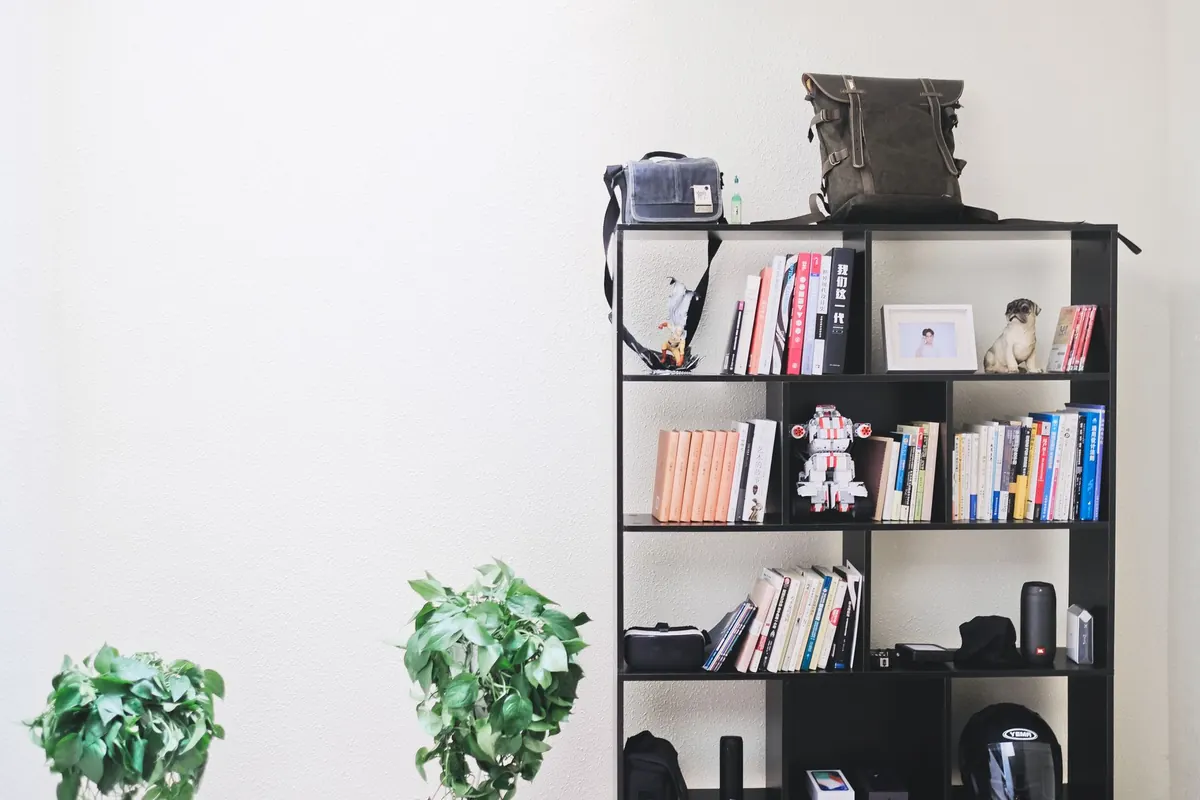
An open bookshelf is the most honest piece of furniture in a room. Nothing hides. Every paperback with a cracked spine, every souvenir mug, every tangled charging cable sits in plain view, which is why so many shelves end up looking like storage rather than decoration.
The usual advice is to empty everything and start over. That rarely helps for long. What actually changes a shelf is rhythm: a repeating sequence of tall and short, dense and empty, horizontal and vertical. Once you find the beat, you can keep adding the things you love without the shelf turning into a pile. Here is the pattern worth coming back to.
The Four-Beat Rhythm That Keeps Shelves Calm
Treat each shelf as a measure of music with four beats: an anchor, a stack, an object, a gap. Not every shelf needs all four, and the sequence does not have to be identical from top to bottom, but if you keep returning to that order the eye finds something to rest on.
- Anchor: the tall element that gives the shelf its structure. A run of upright books, a large vase, a leaning framed print.
- Stack: three to six books laid flat, which drops the eye down and breaks the vertical rhythm.
- Object: one ceramic, bowl, small sculpture or candle that sits alone and gets noticed.
- Gap: actual empty shelf, roughly a hand's width or more, where nothing lives.
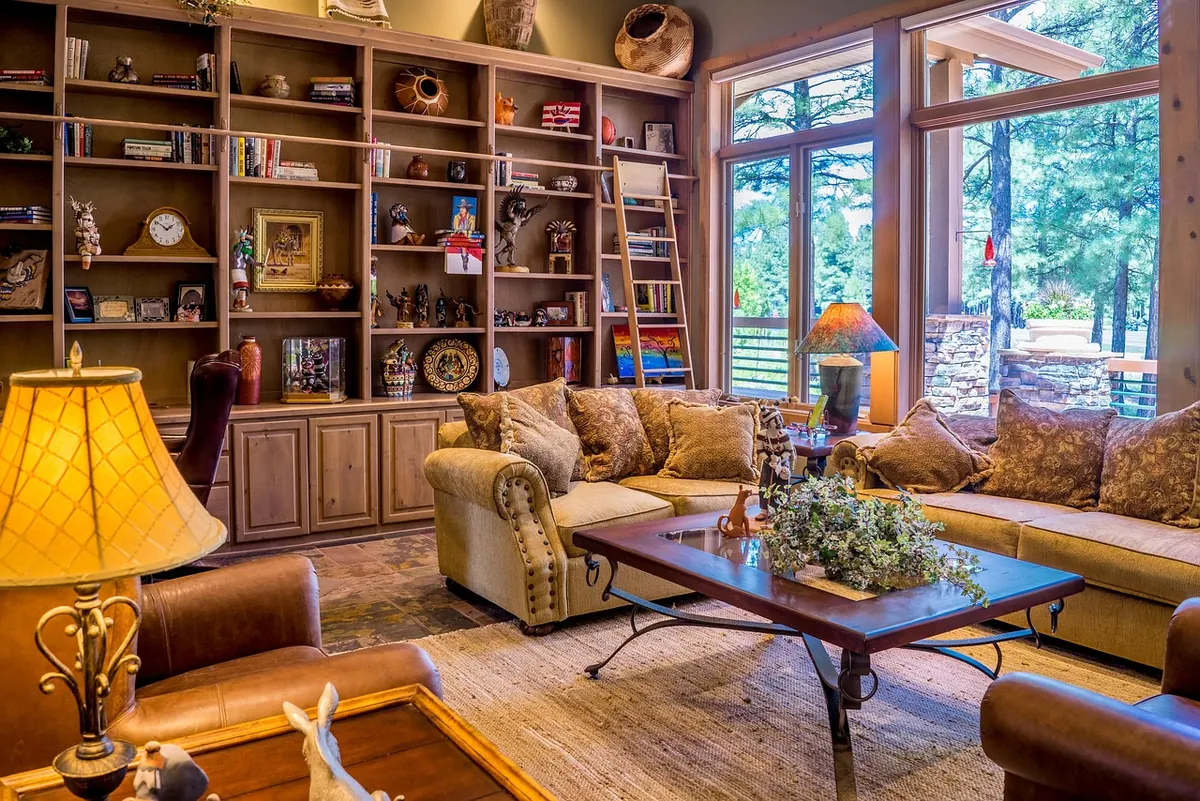
A worked example on a shelf about ninety centimetres wide: a tight run of upright books at the left taking up a quarter of the width; four art books laid flat in the middle with a small stoneware dish resting on top; a single matte vase at the right; the remaining space left bare. That is one measure.
The mistake is repeating it exactly on every shelf, which reads like a showroom. Shift the sequence sideways as you move up or down the unit, so the stack on the bottom left becomes a stack on the top right, and the eye travels diagonally instead of hitting the same column twice.
Negative Space Is the Most Underrated Thing on the Shelf
Most cluttered shelves are not full of too many objects. They are full of objects with no room to be seen. A ceramic bowl needs air above it and around it, or it becomes part of a grey mass.
Aim to leave roughly a third of each shelf open, but not in the same place every time. Cluster your empty space rather than sprinkling it thinly. One generous gap beside a vase is worth more than six small gaps between plates.
Two habits help more than any rule. First, pull objects forward from the back of the shelf, closer to the front edge, so the empty space sits behind them and the shelf gains depth. Second, avoid lining pieces up in a row facing outward, like goods on a counter. Staggering depth, with one object slightly ahead of another, immediately looks less like a display and more like a home.
Let Books Do Some of the Work
Books are the easiest way to build structure, and the most common way to ruin a shelf when they are the only thing on it. Use them in two directions and you get instant variation without buying anything.
Vertical, horizontal, and the stack that becomes a pedestal
Keep upright groups roughly similar in height, and resist the urge to arrange by colour unless the spines are already a mess. A row of books interrupted halfway with a bookend floating in mid air looks accidental; use a heavy bookend, or better, let one horizontal stack of books act as the wall that holds the row in place.
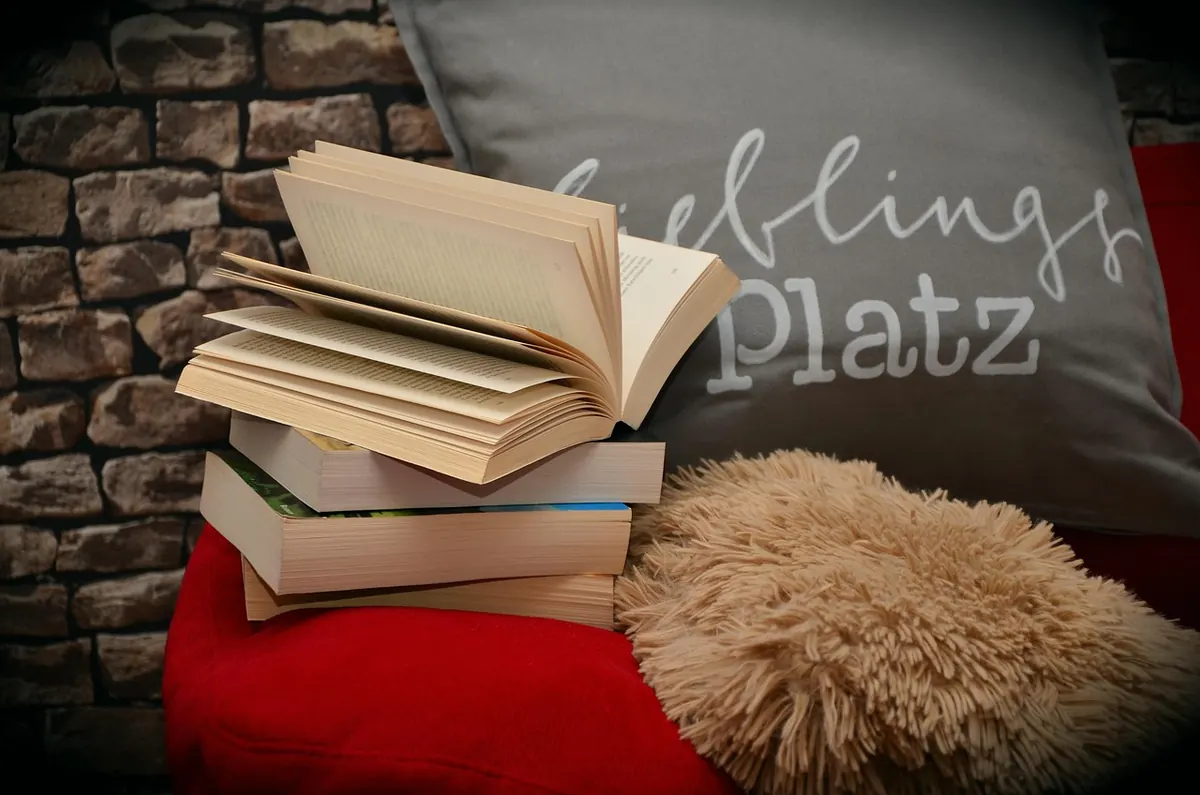
Horizontal stacks should not exceed six books, and should not appear twice on the same shelf. Their real value is as a plinth. A stack of three large books with a small dish, a candle or a pebble on top turns dead space into a pedestal and gives a short object the height it needs to hold its own next to tall spines.
One small trick worth knowing: if the spines are visually chaotic, turn two or three books so the pages face out and the covers hide. Used sparingly it creates a pale, quiet block that calms a busy shelf. Used across a whole unit it looks like a shop that has run out of stock.
Choose Objects That Disagree Slightly
The shelves that photograph well are rarely the ones with the most expensive pieces. They are the ones where materials and heights argue a little. Matte ceramic next to glass, wood next to stone, a glossy glaze beside something chalky and unfinished.
Group objects in odd numbers, three is usually enough, and vary the heights within the group: one tall, one medium, one low. Leave a hand's width between pieces so each one has a silhouette. Two identical vases side by side only work if the duplication is clearly deliberate, and even then it is hard to pull off on a small shelf.
Colour works the same way. Pick one accent, terracotta, brass, deep green, and repeat it three times across the whole unit rather than scattering every colour you own. Repetition is what makes a random collection read as intentional.
And be strict about small things. A single tiny brass animal on an otherwise empty shelf looks like a treasure. Ten of them look like a car boot sale. Keep the tiny pieces to one per shelf, and rotate the rest in a cupboard.
Let Art Lean, Not Hang
On open shelves, framed pieces usually look better leaning against the back panel than fixed to it. A small frame propped in front of a larger one, overlapping by a few centimetres, adds depth and stops the shelf from reading as flat. A dab of museum putty under the bottom edge keeps it from sliding when the shelf is dusted.
Watch the scale. A small frame placed on a deep shelf with nothing around it disappears. Set it on two stacked books so it clears the surface, or lean it against a row of spines. Larger works can stand alone at the end of a shelf as the anchor, provided you leave real space on either side.
Small mirrors, decorative plates and shallow bowls on stands follow the same logic: they are anchors, not decoration to be sprinkled around. One per unit is usually plenty.
The Edit: What to Remove When It Still Feels Busy
If a shelf still looks restless after styling, the problem is usually addition, not arrangement. Take a photograph of the whole unit straight on; the camera flattens everything and shows clutter you have stopped noticing.
Then look for these signals and remove accordingly:
- More than three objects of the same type on one unit, whether candles, vases or photo frames.
- Everything at the same height, so there is no line for the eye to follow.
- Objects arranged in a neat row against the back panel with no depth.
- Two horizontal book stacks on the same shelf.
- Anything you keep only because it was a gift, plus cables, remotes and paperwork that belong in a drawer.
Move the removed pieces to a tray in another room for a week. Anything you do not miss can go; anything you do miss was probably in the wrong place to begin with.
Style One Shelf, Then Live With It
Work on a single shelf at a time, starting from the top, and empty it completely before you begin. Lay the candidates on the floor, build the four-beat rhythm from the anchor outward, and put back only what earns its place. Finish the shelf, step back three metres, and look at it from where you actually sit in the room. Something that reads beautifully from close up can vanish from across the sofa.
Then leave it alone for a week. Styling a bookcase is not a one-afternoon job so much as a slow conversation with your things. Add one piece at a time, adjust after you have used the shelf for real, and dust as you go, since a layer of dust undoes more styling than a wrong vase ever will. When the room changes with the season, swap three or four objects rather than rebuilding the whole unit. The rhythm stays; the cast rotates.
Photo: 祝 鹤槐 / Pexels