7 Common Living Room Decor Mistakes That Make the Space Feel Smaller

You can fill a living room with things you genuinely love and still feel like the walls are inching closer. Most of the time it isn't the square footage. It's a handful of small decisions — a rug that stops short, a sofa a few inches too deep, a side table that became a permanent landing pad — quietly eating the floor space you already have.
The encouraging part is that these are the cheapest problems in decorating to solve. None of them require a builder, a new sofa, or a bigger budget. Here are the seven mistakes that most reliably make a living room feel smaller than it is, and what to do instead.
Mistake 1: The Rug That's Too Small
A rug is the floor plan of your living room. When it's too small, it stops being a floor plan and becomes a bath mat in the middle of the room. Every piece of furniture ends up sitting on bare floor, so the sofa, chairs and coffee table read as separate objects scattered in a space rather than one comfortable group.
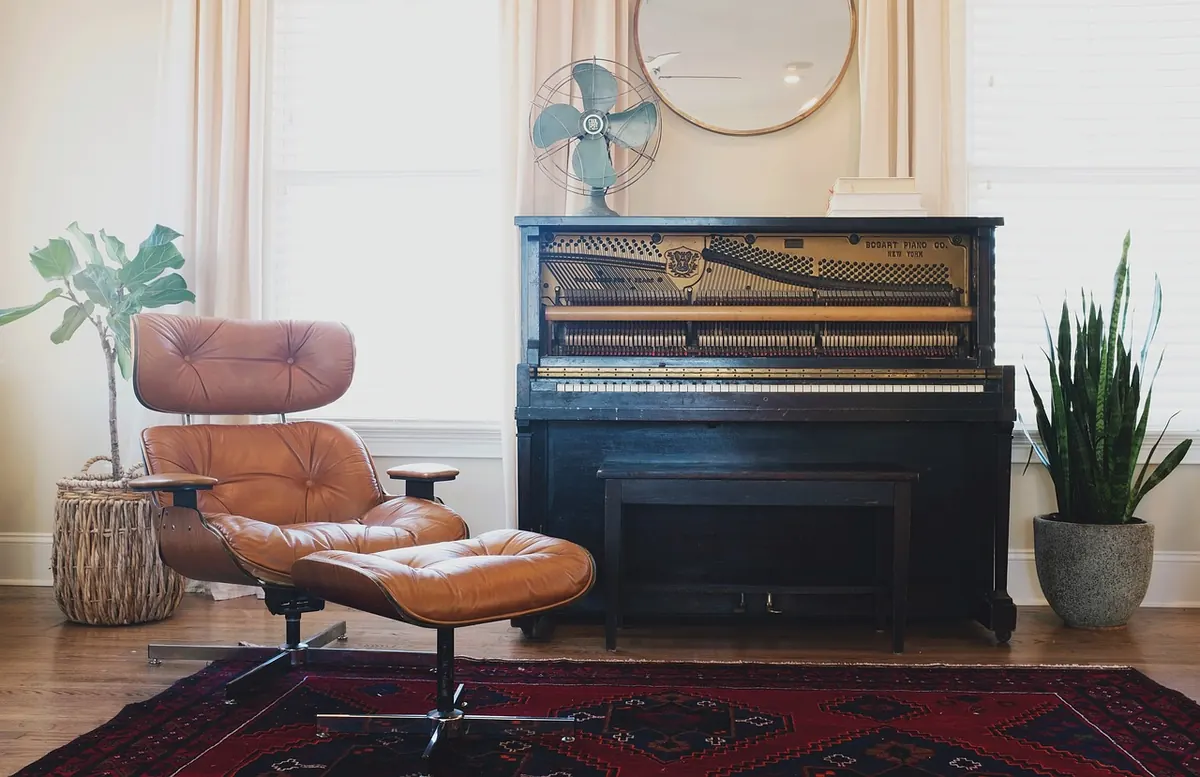
The fix is a rug big enough to sit under the furniture. At minimum, the front legs of your sofa and chairs should be on it. Ideally, all the legs of the seating are on, with the rug extending roughly 8 to 12 inches beyond the edges of the sofa on each side. In a narrow room, lay an 8x10 the long way rather than a smaller square, and leave a strip of bare floor — around 12 inches or so — between the rug and the walls so the room still has a visible border.
If you already own a small rug you love, don't banish it. Layer it over a larger, plain jute or sisal base. The neutral layer does the sizing work; the smaller rug becomes pattern and colour on top.
Mistake 2: Furniture That's Out of Scale With the Room
Oversized pieces that swallow the floor
A deep sectional in a modest room is a generous idea that rarely works. Once it's in place, there's no room to walk, no room for a coffee table, and no visual rest. Before you buy anything large, mark the footprint on the floor with painter's tape and walk around it for a day. Keep roughly 30 inches clear along your main walking route and 14 to 18 inches between the sofa and the coffee table — close enough to reach a cup, far enough to pass through.
Undersized pieces that float
The opposite error is just as common: a slim loveseat pushed into a corner of a generous room, or a single armchair marooned against a long wall. Furniture that's too small leaves the room looking unfinished, and unfinished rooms always feel awkward rather than airy. If you can't buy larger seating, group what you have. Two chairs with a shared side table and a lamp read far more substantial than one lonely chair.
Mistake 3: Everything Pushed Against the Walls
When every piece of furniture touches a wall, the middle of the room becomes a corridor. You create a large empty centre surrounded by a ring of objects, which is exactly the layout of a waiting room — and waiting rooms never feel cosy.
Try pulling the sofa 6 to 10 inches away from the wall, or better, float it in the room to define a conversation zone. A narrow console behind it, holding a lamp and a couple of books, gives the back of the sofa a purpose. Angle a chair toward the group instead of lining it up with the wall. You'll lose a few inches of floor, but you'll gain a room that has a centre and a reason for being.
Mistakes 4 and 5: Clutter Dressed Up as Decor, and Too Many Small Accents
Clutter that reads as decoration
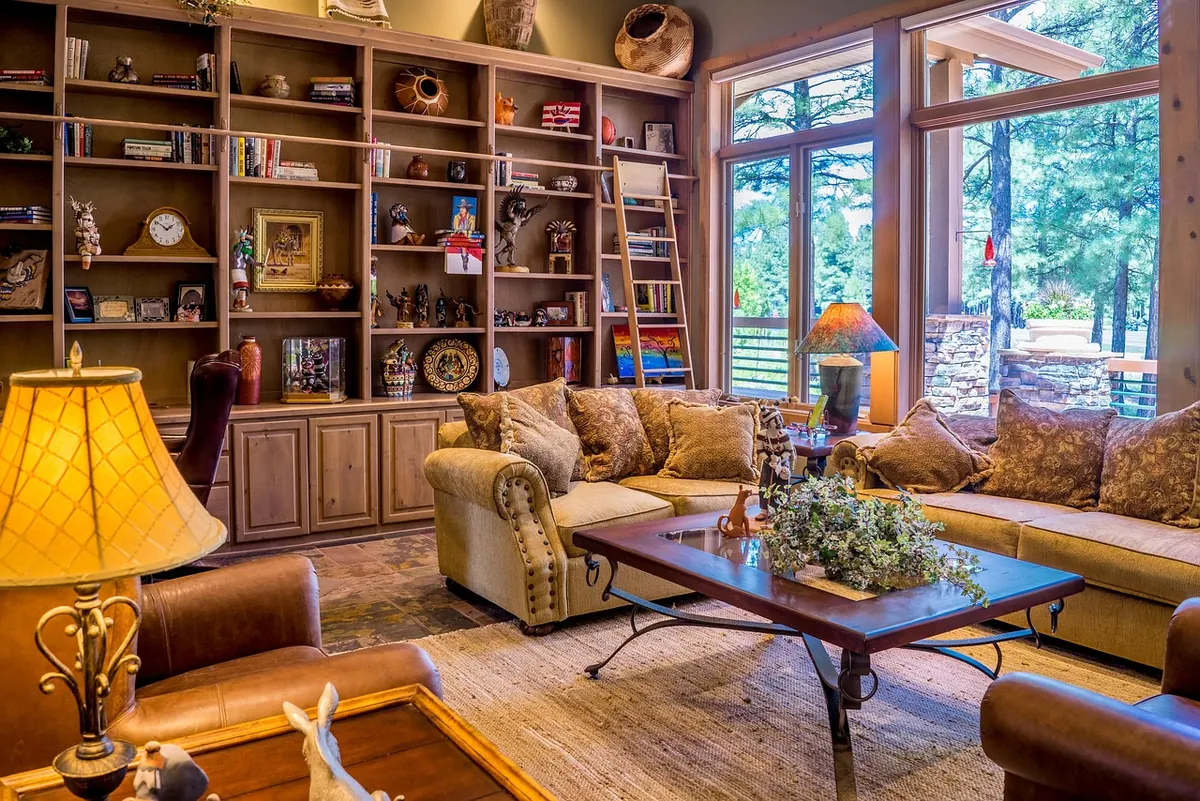
This is the quietest space-shrinker of them all. A shelf of objects with no order, a coffee table holding nine things, chargers and post trailing across a sideboard — each item is small, but together they crowd the eye. A room packed with small visual events feels tight no matter how many metres it measures.
- Clear every surface completely, then put back only what you'd genuinely miss.
- Keep one tray for small items — remote, keys, reading glasses — instead of scattering them.
- Move paperwork, cables and chargers into a drawer or a closed basket.
- Edit bookshelves so roughly a third of each shelf is empty space.
- Choose one object per surface that's worth looking at, rather than five that blur together.
A sea of small accents
Ten small frames, a row of tiny figurines, six little plants: this is scale by accumulation, and it makes a room feel busy and cramped at once. One large piece — a big framed print, a generous ceramic bowl, a substantial floor plant — carries more presence and takes up less visual room than a cluster of small things. Group small objects onto a tray or into a single arrangement with 2 to 3 inches between pieces so they read as one item, not twelve.
Mistake 6: Heavy Layers That Block Light and Air
Curtains hung on a rod just above the window frame cut the room in half and make the ceiling look lower than it is. Hang the rod close to the ceiling and extend it well past the window on both sides, so that when the curtains are open the glass is almost entirely exposed. Light is the cheapest way to make a room feel larger, and half-covered windows give it away.
Dark colours aren't the problem — heavy contrast is. Painting walls, trim and ceiling in related tones softens the edges of the room and makes the boundaries less noticeable. Too many competing patterns at different scales have the same crowding effect, so keep bold pattern to one or two places and let the rest of the room stay quiet. And check that no tall cabinet or floor lamp is standing in front of your best window.
Mistake 7: Art Hung Too High, Too Small, or Too Random
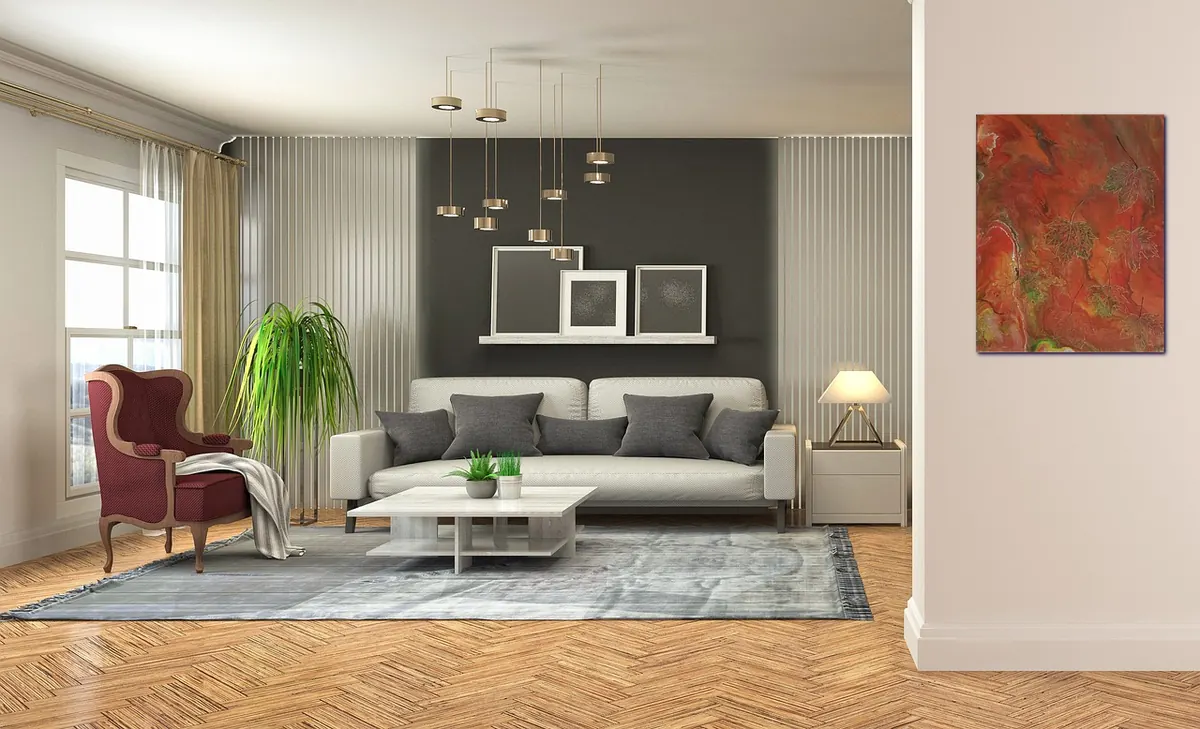
Art hung near the ceiling disconnects from the furniture below and leaves a strange empty band of wall, which makes the ceiling feel lower and the room feel taller than it is in the wrong way. Aim for the centre of the artwork to sit at roughly eye level — around 57 to 60 inches from the floor — or 6 to 10 inches above the back of the sofa if you're hanging over seating.
The second half of this mistake is a scattering of small frames across a large wall. Each one is a dot, and dots make a wall feel bigger and emptier than it is. Gather them into one arrangement with consistent gaps of about 2 to 3 inches, or replace them with a single larger piece. One confident rectangle will always calm a room faster than six hesitant ones.
The Weekend Reset
You don't need to redecorate to test all of this. Set aside an afternoon and work through the room in order:
- Clear the floor of everything that isn't furniture and look at what's left.
- Check the rug against the seating. Pull it out so at least the front legs are on it.
- Float the sofa slightly off the wall and angle one chair toward the group.
- Empty the coffee and side tables, then return three things at most.
- Lower the art and rehang the curtains higher and wider.
- Walk the room. If you have to sidestep anything, remove it.
Live with the result for a week before you bring anything back. Most people find they miss very little — and that the room, unchanged in size, suddenly has somewhere to breathe.
Photo: chica_de_tulear / Pixabay